High levels of new build activity
The number of new build transactions in Edinburgh increased by 30% last year. Some of the highest volumes of new build transactions took place in the suburban locations of Liberton and South Queensferry. However, the strongest growth in transactions last year was witnessed closer to the city centre.
Whilst new build activity at flagship sites such as Quartermile continued, there was a strong increase in south west Edinburgh as well as Leith in the north. The redevelopment of Edinburgh St James at the eastern edge of Princes Street is encouraging a gravitation towards the east of the city centre.
The highest number of new build transactions last year took place in eastern locations of the city around McDonald Road and Leith Walk. Looking ahead, value growth across Edinburgh will continue, with some new build properties, at developments such as Donaldson’s, beginning to exceed £700 per square foot.
Prime transactions
Prime transactions above £400,000 in Edinburgh reached a record 1,733 during 2017, which was 15% higher than 2016. Transactions above £750,000 increased from 247 in 2016 to 274 in 2017. The southern hotspots of Grange, Morningside and Merchiston accounted for the largest proportion of prime activity, with a total of 377 transactions last year.
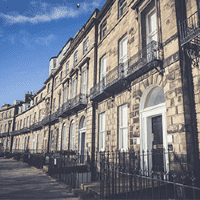
However, Edinburgh’s New Town, which typically accounts for 11% of prime transactions, has seen little movement in volume over the last three years. This is because of a drop in the number of prime second hand properties launched onto the market, which fell by 33% in the New Town’s EH3 6 postcode in 2017 compared to 2016. LBTT is still affecting supply issues in the New Town and the lack of choice has resulted in a vicious circle, as potential sellers delay launching to the market until a suitable property is available. The lack of supply and strong demand is one of the main reasons behind prime values in Edinburgh City increasing by 5.3% during 2017Q4 compared to 2016Q4.
But some areas of Edinburgh witnessed an increase in prime second hand supply and transactions. These include the western suburbs of Murrayfield and Corstorphine, where the number of prime transactions increased from 99 in 2016 to 148 in 2017. Elsewhere in Edinburgh, prime activity in the West End, Ravelston, Stockbridge, Inverleith, Trinity, Barnton, Cramond and Colinton remained relatively buoyant throughout 2017.


.jpg)
.png)
.png)
.png)