.jpg)
Climate change policy is set to have an impact on the forestry sector with the Government keen to develop the private market for carbon sequestration
The UK’s commitment to net-zero carbon emissions by 2050 could dramatically impact land management. There is a growing debate over the role of the UK’s natural capital in meeting climate objectives. Public grants for tree planting and other forms of carbon sequestration are yet to feature in draft agricultural policy, but this is likely to change over the coming year; the rapidly emerging market for private carbon investment will have to integrate into this public policy framework.
Tree-planting rates in the UK have been in decline since the 1980s. EU subsidies focused on singular land use and onerous UK regulations have disincentivised afforestation. Currently, 13% of the UK land area is wooded, far below the European average of 38%. Scotland plays the dominant role in tree planting and timber production, but the sector has the capacity to expand nationwide. Around 9,000–10,000 hectares are planted throughout the UK each year. The Government’s proposals for reaching net zero by 2050 included planting 30,000 new hectares each year by 2025, an area equivalent to 75,000 football pitches and at least three times the current planting rate. This requires an increase in woodland cover from 13% to 17% by 2050.
The net zero debate has repositioned tree planting for carbon sequestration at the top of the environmental agenda and there are a range of potential markets for landowners.
There is a distinction between mandatory carbon trade and the voluntary market for carbon offsets. Regulated carbon market audit costs make this scheme unattractive to forestry investors in the UK with current carbon values. The EU Emissions Trading System (ETS) currently values carbon at c.£25/t.
Voluntary carbon is currently certified under the UK Woodland Carbon Code. The code exists to enable companies to offset their emissions by buying carbon in woodland, providing a guarantee that forest is being managed correctly for offsetters. The downside is that the code does not encourage small scale planting, as the cost of validation is high at around £1,000 per project, with continual costs for verification every five years. This market is anticipated to continue to grow significantly especially as ways of measuring carbon stocks remotely improves.
The Woodland Carbon Guarantee is a newly established £50 million Government fund that aims to develop the domestic market for woodland carbon in England. It enables owners to auction captured carbon dioxide in the form of Woodland Carbon Units (verified under the Woodland Carbon Code), to the Government for a guaranteed price every five or 10 years up to 2055–2056. The credits can be sold privately on the open market if the price is higher. According to the Woodland Carbon Code, one hectare of newly planted native broadleaves sequesters around 300t of CO2 over 50 years. Recent UK woodland sales have realised between £3 and £10/tCO2e (notably less than the regulated ETS), totalling £1,800 per hectare over the 50 years (£36 per hectare per year).
Currently, around 70% of carbon rights are sold in advance, enabling land managers to quickly recoup their outlay, the remainder is sold later as the woodland matures. The rate of sequestration varies by tree type and by age. The Government is keen to develop the private market for carbon sequestration and with growing corporate social responsibility and financial disclosure requirements, higher prices are in theory achievable.
AGROFORESTRY
Agroforestry is the inclusion and use of trees as part of a wider agricultural system, for example, alley cropping or grazing animals under orchards. Agroforestry provides fruit, nuts, timber and biomass in the same space as other crops, while also increasing the biodiversity and resilience of the land. It is possible that agroforestry schemes may be encouraged in future agricultural policy, alongside other planting incentives.
Barriers to planting
Despite the attractive income streams of commercial timber and the carbon market, and the substantial tax benefits of both, there remain significant barriers to tree planting. Obtaining planning permission or environmental impact assessments for a change in land use from agricultural production to forestry can be time-consuming and the process varies from region to region. Woodland is deemed to be a permanent land-use change, meaning that at the end of their production cycle, woods need to be replanted rather than reverted to farmland. This often deters farmers, as reducing productive farmland is counterproductive to achieving agricultural economies of scale. Choosing resilient planting stock is not easy, particularly when supply is not abundant. The risk associated with a 25–50-year production cycle should not be underestimated.
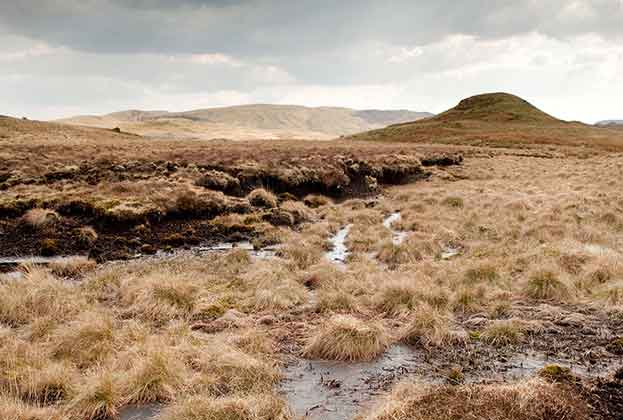
The concern is that environmental policy becomes too target-focused, using carbon sequestration as its only indicator of success. The varied nature of the UK’s landscape means tree planting must be location specific and in adherence with the UK Forestry Standard, or else we risk repeating the mass tree-planting schemes of the 1980s that led to the destruction of unique blanket bogs in north-west Scotland.
Growing potential
Forestry can be a win-win for landowners, with rapidly growing potential income streams. However, it is important to retain a long-term viewpoint when thinking about investment and consider your options carefully.
Read the articles within Spotlight: Natural Capital below.