
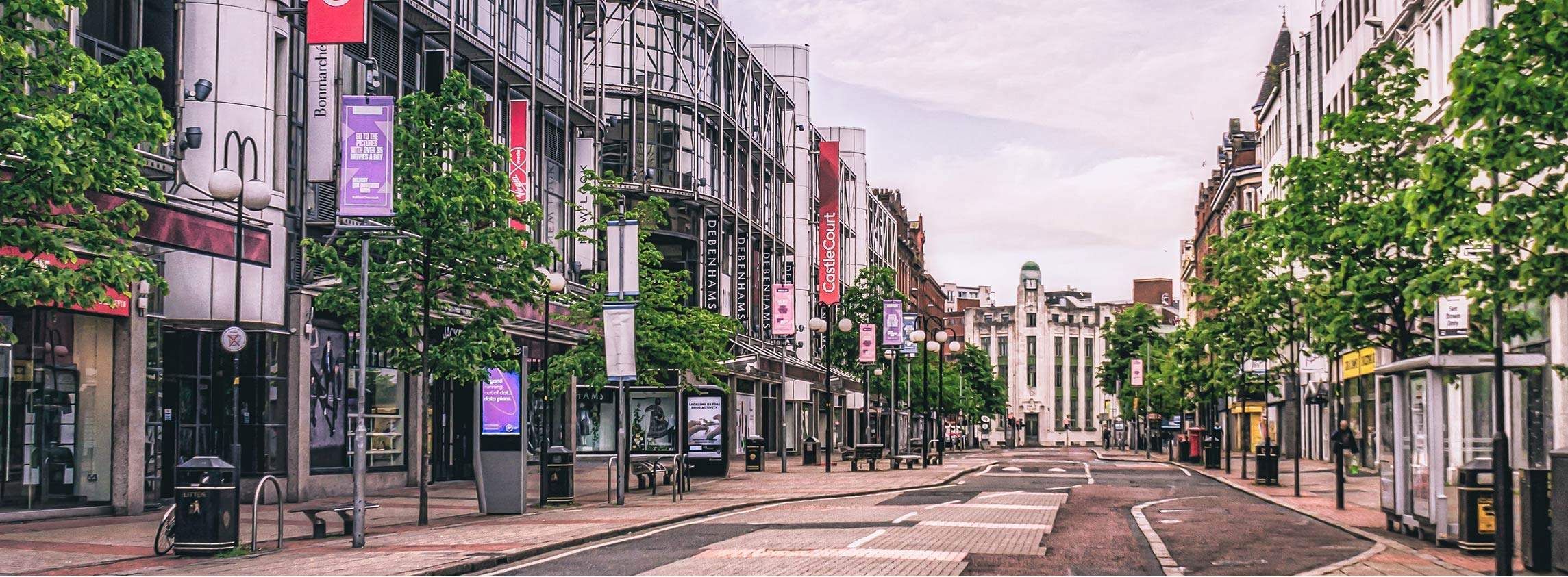
Initial easing of lockdown has seen activity launch in the UK as retailers start to reopen and footfall begins to see signs of recovery
In this week’s update, we bring you the latest insights on footfall trends, occupier updates on their reopening strategies and a summary of the government announcements as we begin to see the lockdown measures eased across the UK. We have also looked at the government announced support for retail in the UK and considered those who have successfully secured new funding in the last few months as an indication of how the market will recover.
Our international colleagues have provided more updates on their markets, with summaries from Germany, Italy, Spain and Portugal on how the easing of restrictions is impacting retail and leisure. As Spain and Italy have started to reopen with their own restrictions in place, it provides an interesting insight into how retailers and consumers are reacting and what that can mean for the UK market in the next few weeks as we continue to navigate the well-publicised ‘new normal’.
HEADLINE UK RETAIL INSIGHTS
Footfall trends
- The Prime Minister’s announcement to ease some of the lockdown measures from 10th May has resulted in a boost in weekly footfall performance. According to Springboard, the week ending 23rd May marked the third consecutive week of growth across each retail destination type, on a week-on-week (WoW) basis. Total UK footfall increased by 12.2% WoW, driven in part by a 14.9% uptick in weekly high street footfall, which has no doubt accelerated as a response to both the eased lockdown measures coupled with warmer weather. Retail parks and shopping centres experienced weekly growth of 10.6% and 8.4% respectively.
- UK footfall in the week to 23rd May recorded a decline of 71.9% on a year-on-year (YoY) basis, its lowest YoY fall since the week prior to lockdown (week ending 21st March). The same trend is seen across each retail destination type with retail parks, on the whole, continuing to report a slight outperformance, recording a 52.4% decline on a YoY basis.
Economic overview
- The continued impact of Covid-19 and subsequent lockdown restrictions are having a lasting effect on global economics. Oxford Economics predict that approximately 65% of global GDP was accounted for by countries under lockdown in early Q2 2020.
- Current forecasts suggest that global economic activity will pick up significantly in the second half of the year. Nonetheless, Oxford Economics are expecting full-year 2020 global GDP to contract by 4.8%, 2.0pts lower than the previous forecasts set in April. In the case of the UK, the continuing impact of the outbreak and updated government guidelines to easing lockdown restrictions has prompted a downwards revision of economic forecasts, with real GDP now expected to contract by 8.3% in 2020, followed by a substantial rebound of +7.8% in 2021.
Government lifting of restrictions in England – a summary of current rules and guidelines;
- The Prime Minister’s announcement as of 25th May set out the following for England:
• Outdoor markets and car showrooms are able to open from 1st June where they meet the Covid-19 secure guidelines.
• All other non-essential retailers including fashion retailers, shops selling toys, furniture, books and electronics, plus tailors, auction houses, photography studios and indoor markets, will be able to reopen from 15th June. This is subject to all retailers being able to follow the Covid-19 secure guidelines.
• Hairdressers, nail bars, beauty salons and the hospitality sector remain closed until further announcement.
• Businesses will only be able to reopen from these dates once they have completed a risk assessment, in consultation with trade union representatives or workers, and are confident they are managing risks.
Retailer financial performance update
- B&M has reported strong performance its financial year-end results, largely fuelled by high demand for food products in March as Covid-19 impacted consumer habits. The retailer has remained open throughout the pandemic, with the exception of 49 stores all of which are now reopened, with like-for-like revenue up 22.7% for eight weeks ending 28th March 2020, with DIY and gardening products fuelling this growth.
- Ted Baker announce financial year-end results demonstrating a fall in retail revenue by 4.6% resulting in a fall in profit before tax and IFRS 16 by 84.4% for the 52 weeks ending 25th January 2020. Retail sales declined by 33.9% for the 14 weeks to 2nd May 2020 versus last year, with online increasing by 50.3%. GlobalData forecast a slow recovery as stores across Europe start to reopen, with demand forecasted remain subdued as social events and weddings on hold. The retailer announced on 1st June that it is raising £95m to reduce its debt and invest in its transformation plan.
- WHSmith reported growth of 7% in total revenue for the six months ending 29th February 2020, albeit the outlook for H2 2019/20 is less positive. Total revenue fell by 85% in April compared with the same period last year with travel revenue, usually the strongest performing division, falling by 91%. Its share price has fallen 65% since the beginning of 2020 reflecting the poor outlook as a result of the government travel restrictions. High street sales were also down 74% in April despite 203 stores remaining open for essential post office services.
Announcements regarding the lifting of restrictions in Wales, Scotland and Northern Ireland, and reopenings across the UK
Wales
- As of Friday 29th May, a household can now travel to another household up to a distance of five miles to meet family members in the outdoors. Non-essential retailers, however, are not permitted to reopen.
- Following the Welsh First Minister’s announcement on Friday 29th May, shops that can comply with social distancing have now been directed to prepare for potentially reopening in three weeks time. The final decision for this is to be made at the end of the next 21-day review.
Scotland
- Phase one of a four-stage plan to exit lockdown was announced on Friday 29th May, allowing people from two households to meet outside at a social distance and the reopening of garden centres and drive-through takeaways.
- Reopening of small retail stores and outdoor markets is anticipated in phase two, with larger retail stores, pubs, restaurants, hairdressers, dentists, museums, galleries, libraries and cinemas set to reopen in phase 3. The dates upon which these phases will begin are to be confirmed.
- In response, the following retailers have announced reopenings:
• Dobbies to reopen all garden centres across Scotland, in Stirling, Perth, Milngavie, Dunfermline, Braehead, Livingston, Dundee, Sandyholm, Edinburgh, Inverness, Ayr and Aberdeen.
• Halfords is set to reopen five stores in Scotland, in Edinburgh, Dundee, Inverness, Stirling and Hamilton.
• McDonald’s are reopening another 975 branches in the UK by 4th June, including all drive-throughs in Scotland.
• Subway are to reopen 56 stores in Scotland for takeaway, as part of a phased reopening plan for a quarter of all stores across the UK.
• Pret a Manger have opened three Scottish branches at 30 North Bridge in Edinburgh along with 144–146 Queen Street and 65–69 Bothwell Street in Glasgow. Further openings in Edinburgh and Glasgow have taken place this week.
Northern Ireland
• Ikea has opened their Belfast store this week as part of their 19 store reopening plan.
• Nando’s reopened the Belfast branch for collection and delivery only from May 27th.
England
• Ikea has opened 19 sites this week across England and Northern Ireland, with Ikea in Nottingham attracting 700 customers on its first day.
• John Lewis plans to reopen stores in Poole and Kingston will be the first to reopen on 15th June, followed by the stores at Bluewater, Cambridge, Cheadle, Cheltenham, High Wycombe, Horsham, Ipswich, Norwich, Nottingham, Solihull and Welwyn on Thursday 18th June.
• B&Q confirmed all of its 288 UK shops were open to the public, with strict new safety measures now in place. Stores are also open in Wales, Scotland and Northern Ireland.
• Poundland announced that it is reopening a further 26 stores across the UK. The discount retailer said that while it had kept most of its stores open for essential shopping, around 100 were temporarily shut in March. Now, trade will resume in the additional stores again this week after it opened 51 shops earlier this month.
• Greggs are planning to reopen 800 of its sites from the middle of June, after trial openings of a dozen stores in the North East, its home region.
• Halfords are reopening 53 of its stores across the UK to customers.
• Mango accelerated store reopening plan and now has more than 1,000 stores open worldwide, with the remaining 344 stores to reopen by 2nd June.
• Next plan to open 25 of its stores on 15th June. The retailer will prioritise larger, out-of-town stores, where social distancing can be more easily implemented.
• Nando’s initially reopened 54 of its restaurants for delivery and collection services across the UK and Ireland on Tuesday 26th May. Nandos have now reopened a further 40 sites from Wednesday 27th May as part of its phased reopening programme.
• Topps Tiles had reopened 250 stores by the end of May, with the remaining 100 stores open by the end of June.
• Wagamama initially opened 24 sites on 21st May, followed by a further 20 sites on 28th May. Wagamama are aiming to open 67 sites by the end of next month (June). The first Wagamama delivery kitchen sites to reopen were in Peckham, Hackney, Bow and Leeds.
• Starbucks reopened 150 UK stores on 14th May, with 15% of its UK stores reopening in the first phase, predominantly focused on Drive Thru stores.
• Pret a Manger have reopened a further 204 shops this week in addition to the 101 shops opened for take away and delivery in May.
• Costa Coffee have reopened a further 58 stores on 28th May, and now have 277 open in the UK. These recent reopenings have been of the drive-through stores.
New funding during lockdown:
- While Covid-19 may have halted many aspects of the retail and leisure market, some operator acquisition deals have continued to complete, highlighting longer-term confidence in parts of the sector, particularly from private equity backers.
• In the lead up to lockdown in mid-March, Inverleith LLP completed the acquisition of outdoor clothing specialist Montane. Multiple deals have also reached completion since the lockdown including luxury trainer retailer Kick Game, receiving £2.5m backing from private equity firm VGC Partners last week, with the objective of expanding its online platform. Vestiaire Collective also successfully raised £51m in its latest round of funding in late April, including backing from new investors Korelya Capital, in a move to help propel its global expansion plans.
• A number of acquisition deals involving larger established brands have also completed in recent weeks, including TM Lewin being acquired by SCP Private Equity from Bain Capital in mid-May, as well as Boohoo, who announced the acquisition of the remaining 34% stake in PrettyLittleThing for c.£270m.
- The fact that such deals continue to complete during a turbulent time in the retail market points towards the longer-term confidence that some businesses have for the right parts of the retail market.
Government’s support for retail landlords:
- The government announced on Friday 29th May that prior to the June quarterly rent date, a code of practice will be published to support high street landlords during the Covid-19 pandemic.
- This will initially be a temporary code of practice and the government “will explore options to make it mandatory if necessary”. It aims to provide “clarity and reassurance” over rent payments, with further guidance on rent arrear payments. It will be a voluntary framework, to enable “collaboration and cooperation within the sector and help ensure no one part of the chain shoulders the full burden of payment”.
- Membership of the working group set up by the government currently includes: British Chambers of Commercial, British Property Federation, British Retail Consortium, Commercial Real Estate Finance Council, Revo, Royal Institute of Chartered Surveyors, and UKHospitality.
- UK Finance also confirmed “continued support for commercial landlord customers, including amendments to facilities and capital payment holidays”. It has also been reported that all main commercial lenders will contact their commercial landlord borrowers, to identify concerns and provide support where appropriate.
EUROPEAN RETAIL INSIGHTS (FROM SAVILLS RETAIL AGENCY TEAM)
- The latest insights from our colleagues in Europe show us the results of countries that have begun to open up the retail and leisure sectors with social distancing and safety restrictions in place.
- High street retail stores and shopping centres have now reopened across Germany, with no size restrictions (these have now been lifted).
- Retail footfall is back up to 50–60% pre-Covid levels and slowly increasing
- Retailers experiencing 80% sales turnover levels this week (six weeks post lockdown), up from the 40–50% level they experienced (two weeks post lockdown)
- High street retail performing better than shopping centres, and luxury retailers are outperforming the more mainstream retail operators.
- People have to wear masks while shopping and when entering restaurants, but can remove them when they sit down to dine.
- Restaurants have all now reopened albeit with strict rules in place in terms of table numbers, distance between tables etc. (the majority of restaurants are only using every other table and allowing at least a 1.5m gap between each table setting).
- Despite positive signs of a return to pre-Covid activity, development plans are still on hold, with talk of some aiming to resume in September.
- Some private landlords have offered rent concession of half rent during the period of closure, but larger institutional landlords have not.
Insights from Italy
- Retail has reopened, and the results have been above expectation, on average sales are down 30% on this time last year.
- Shopping centres have reopened, but leisure facilities including cinemas and gyms remain closed.
- Footfall analysis has shown that there has been a 10% reduction in footfall in smaller neighbourhood shopping centres, while there has been a 50% reduction in footfall in those larger regionally dominant schemes – suggesting consumers are still preferring to shop locally.
- Restaurants have now reopened but are at no more than 50% capacity.
- Neither landlords nor occupiers have received financial support from the government but have received reduced taxes for March to June.
Insights from Spain
- All shops on the high street were permitted to reopen in Spain this week, but retailers can only trade up to a maximum of 400 sq m, and some of the larger floorplate operators have delayed opening until the limit on floor space is increased.
- High streets in cities such as Madrid and Barcelona appear busy, and there have been lines outside some stores this week – shows consumer confidence is increasing; however, Mango have reported sales at 20% and Inditex at 30% of pre-Covid levels. Notably it is the younger brands such as Stradivarius that are trading better than the likes of Massimo Dutti.
- Shopping centres are starting to reopen in Spain, with roughly 50% now accessible as those with the majority of shops at less than 400 sq m and street-facing units have opened first.
- Strict sanitisation processes are being put in place across all shopping malls, and out of town retail parks are expected to trade well once reopened, especially those dominated by food stores and homeware brands.
- There is a deferred rental payment scheme in place across the board in Spain meaning that retailers will have to pay back missed rental payments over time post Covid-19, depending on the landlord´s real estate portfolio – smaller landlords will be repaid sooner than larger landlords with a maximum of four years.
- In terms of tourism, the number of Brits travelling to Spain this summer will be limited given the restrictions that have been put in place by the UK and Spanish Government that involves a 14-day quarantine for anyone arriving in the country; however, it seems that as soon as next month tourism could open in the Balearic and Canary Islands where some of these islands are Covid-free). Initial talks have begun about a tourism agreement between France and Italy. Some cities (Barcelona, for example) will be impacted more than others, and small and independent retailers will be harder hit than the larger groups.
Insights from Portugal
- Neighbourhood retail and leisure is performing better than the city centres. Retail in Lisbon is highly dependent on international tourism; however, retailers such as Zara still have queues outside their stores.
- Shopping centres reopened from 1st June, so one to monitor in terms of their performance
- The most occupational demand at the moment is coming from supermarket operators and local Portuguese brands rather than international occupiers, although a majority are only expressing initial interest, and many have said they will not be open to committing to new leases until September.